News from PARWCC!
| View in browser | ||||||||||||||||||||||||||||||||||||||||||||||||||||||||||||||||||||||||||||||||||||||||||||||||||||||||||||||||||||||||||||||||||||||||||||||||||||||||||||||||||||||||||||||||||||||||||||||||||||||||||||||||||||||||||||||||||||||||||||||||||||||||||||||||||||||||||||||||||||||||||||||||||||||||||||||||||||||||||||||||||||||||||||||||||||||||||||||||||||||||||||||||||||||||||||||||||||||||||||||||||||||||||||||||||||||||||||||||||||||||||||||||||||||||||||||||||||||||||||||||||||||||||||||||||||||||||||||||||||||||||||||||||||||||||||||||||||||||||||||||||||||||||||||||||||||||||||||||||
|







| View in browser | ||||||||||||||||||||||||||||||||||||||||||||||||||||||||||||||||||||||||||||||||||||||||||||||||||||||||||||||||||||||||||||||||||||||||||||||||||||||||||||||||||||||||||||||||||||||||||||||||||||||||||||||||||||||||||||||||||||||||||||||||||||||||||||||||||||||||||||||||||||||||||||||||||||||||||||||||||||||||||||||||||||||||||||||||||||||||||||||||||||||||||||||||||||||||||||||||||||||||||||||||||||||||||||||||||||||||||||||||||||||||||||||||||||||||||||||||||||||||||||||||||||||||||||||||||||||||||||||||||||||||||||||||||||||||||||||||||||||||||||||||||||||||||||||||||||||||||||||||||
|
| View in browser | |||||||||||||||||||||||||||||||||||||||||||||||||||||||||||||||||||||||||||||||||||||||||||||||||||||||||||||||||||||||||||||||||||||||||||||||||||||||||||||||||||||||||||||||||||||||||||||||||||||||||||||||||||||||||||||||||||||||||||||||||||||||||||||||||||||||||||||||||||||||||||||||||||||||||||||||||||||||||||||||||||||||||||||||||||||||||||||||||||||||||||||||||||||||||||||||||||||||||||||||||||||||||||||||||||||||||||||||||||||||||||||||||||||||||||||||||||||||||||||||||||||||||||||||||||||||||||||||||||||||||||||||||||||||||||||||||||||||||||||||||||||||||||||||||||||||||||||||||||||||||||||||||||||||||||||||||||||||||||||||||||
|
| View in browser | ||||||||||||||||||||||||||||||||||||||||||||||||||||||||||||||||||||||||||||||||||||||||||||||||||||||||||||||||||||||||||||||||||||||||||||||||||||||||||||||||||||||||||||||||||||||||||||||||||||||||||||||||||||||||||||||||||||||||||||||||||||||||||||||||||||||||||||||||||||||||||||||||||||||||||||||||||||||||||||||||||||||||||||||||||||||||||||||||||||||||||||||||||||||||||||||||||||||||||||||||||||||||||||||||||||||||||||||||||||||||||||||||||||||||||||||||||||||||||||||||||||||||||||||||||||||||||||||||||||||||||||||||||||||||||||||||||||||||||||||||||||||||||||||||||||
|
| View in browser | |||||||||||||||||||||||||||||||||||||||||||||||||||||||||||||||||||||||||||||||||||||||||||||||||||||||||||||||||||||||||||||||||||||||||||||||||||||||||||||||||||||||||||||||||||||||||||||||||||||||||||||||||||||||||||||||||||||||||||||||||||||||||||||||||||||||||||||||||||||||||||||||||||||||||||||||||||||||||||||||||||||||||||||||||||||||||||||||||||||||||||||||||||||||||||||||||||||||||||||||||||||||||||||||||||||||||||||||||||||||||||||||||||||||||||||||||||||||||||||||||||||||||||||||||||||||||||||||||||||||||||||||||||||||||||||||||||||||||||||||||||||||||||||||||||||||||||||||||||||||||||||||||||||||||||||||||||||||||||||||||
|

The hopeful candidate is dressed for success in a suit and tie. He smiles at the camera, takes a calming breath, and clicks his laptop keyboard to start the interview. Within seconds, the mechanical voice of the interviewer glitches, repeating one phrase over and over. The candidate sits helplessly by, watching his opportunity dissolve in real time.
This viral social media clip reflects a growing trend: AI interview platforms like HireVue, myInterview, Talocity and Jobma are transforming the hiring process. They use AI to conduct one-way interviews, score the recorded interviews, and provide insights to help companies see past ChatGPT-enhanced resumes. According to a 2024 survey by Resume Builder, 48% of Fortune 500 companies are already using asynchronous and AI-assessed interviews in hiring. A 2025 TestGorilla survey reported that 21% of employers in the US and UK now use generative AI tools during initial candidate interviews. Requiring candidates to complete an asynchronous interview is quickly becoming a routine part of a fully automated screening process.
In 2022, I began to see an increase in clients required to complete one-way interviews. Over the following years, many of those systems started to incorporate generative AI to score those interviews. My clients wanted to know what to expect, how to prepare, and how to ensure they “scored” well. I made it my mission to learn more – researching the platforms, booking demos, and interrogating any colleagues, friends or recruiters I knew who used the tools.
As with any interview, candidates need to be able to clearly articulate the value they bring to the role and their fit for the team. There are, however, additional considerations that are important for these types of interviews. Here are five coaching adaptations I may make for clients preparing for AI-assessed asynchronous interviews:
AI-scored asynchronous interviews are gaining traction in many industries — notably technology, finance, healthcare, education, retail and hospitality. This trend has implications that will impact how we coach clients. Nuances among platforms and scoring rubrics will drive changes to interview preparation strategies. Clients have questions about data privacy and bias that we need to address, and the relevant laws vary by state. Interview coaches who invest the time to understand the mechanics, ethics and issues involved can give their clients accurate and data-based guidance.
In the high-stakes competition of a job interview, clients count on us to set them up for success no matter who – or what – is on the other side. Jobseekers may interview with AI, but they are still hired by a human. As interview coaches, we are perfectly positioned to help them prepare for both challenges: satisfying the algorithm and connecting with the human reviewing the results.
The U.S. labor market continued its steady, but slowing, trajectory in May 2025, adding 139,000 jobs, according to the latest report from the Bureau of Labor Statistics. While the unemployment rate remained unchanged at 4.2%, a closer look reveals early warning signs that both workers and employers are entering a period of heightened caution.
May’s job gains fall below the post-pandemic monthly average of 149,000, reinforcing a broader narrative: the labor market is cooling. Job growth has lost momentum in recent months, and revisions to prior data underscore this trend. March and April were adjusted down by a combined 95,000 jobs, chipping away at optimism around earlier gains.
Despite the steady unemployment rate, the labor force participation rate dipped to 62.4%, and the employment-population ratio declined to 59.7%. These indicators suggest more Americans are stepping away from work altogether – a sign that should not be ignored.
Some industries remain resilient. Healthcare led the way in May, adding 62,000 positions. Leisure and hospitality followed with 48,000 new jobs, significantly above its monthly average. Social assistance roles grew by 16,000, reflecting ongoing demand for support services.
However, not all sectors fared well. Federal government employment shrank by 22,000 jobs in May alone and is down nearly 60,000 since the beginning of the year. This contraction reflects broader cuts and hiring freezes as agencies brace for uncertain funding and leadership transitions.
Underneath the top-line numbers lies a more nuanced reality: American workers feel stuck. Despite relatively low layoffs, employee mobility has stagnated. Wage growth sits at 3.9% year-over-year, hardly enough to outpace inflation, and the fear of being caught in a layoff cycle has left many employees reluctant to change jobs.
This “locked-in” phenomenon is particularly pronounced among early-career professionals and workers in volatile sectors, such as technology and logistics. Employers, too, are hesitant to hire amid economic ambiguity, creating a standoff where neither side is willing to make the first move.
Two structural factors are quietly reshaping the labor market: declining immigration and renewed tariff pressures. Tighter immigration policies are constraining the labor supply in key sectors, such as agriculture, construction, and caregiving. Meanwhile, trade-related disruptions are driving up input costs and slowing business expansion plans.
Together, these forces are making it more difficult for the Federal Reserve and economic analysts to interpret labor market health, as the usual indicators (payroll gains, unemployment rates) no longer tell the full story.
With the economy still adding jobs and unemployment holding steady, the Fed is unlikely to shift interest rates dramatically in the near term. However, analysts note that policymakers are now paying closer attention to the unemployment rate than to job creation itself. A subtle rise in unemployment, especially if accompanied by shrinking participation, could signal deeper weaknesses ahead.
At the same time, policymakers are increasingly acknowledging the role of immigration in labor market dynamics. How the Fed weighs that factor into future decisions remains to be seen.
The labor market is not collapsing, but it is changing. Job growth persists, yet hiring momentum is fading. Workers are staying put, not necessarily by choice, but by necessity. Anxiety is mounting in boardrooms and break rooms alike.
For job seekers, this means the need for strategic positioning is more critical than ever. For employers, cautious optimism must be balanced with agility. And for policymakers, the coming months will demand vigilance, and perhaps a willingness to adapt traditional economic models to today’s shifting workforce reality.
I originally wrote about this in 2018, but it’s time for an update. At the time I said: “This whole “connected” society thing is cool, but I know a lot of people who view human interaction as a detached state, a necessary evil, or a little of both…I view it as a business opportunity. Actual human interaction is the original social media, more important today because fewer people are doing it well.” That part is still true.
For a referral-driven business like résumé writing, strategically building a community of great clients is more effective than relying on chance.
I frequently advise job-seeking clients to rethink the way they keep score, from “How many applications did you fill out today?” to “How many conversations did you have about your job search?” And it is frequently a struggle, the most common reasons being: 1) they are embarrassed because it appears that everyone in the world is working except them; 2) they have not maintained relationships with people who might be in a position to help. I get it. But avoiding those conversations is not the way to go.
Compare that scenario to your own business. Every client you have shows their résumé to at least a few other people, some of whom are future potential clients as well. At the end of the month, I like to identify the “high pleasure, high profit (HPHP)” clients, meaning they were cool to work with AND I was paid a fair price without any hassle (not necessarily the highest-priced service offered).
At the end of the quarter, my VIP list gets something no one else gets: 1) recognition as a valued client; 2) tools to help find more people like THEM that might be great candidates for my services.
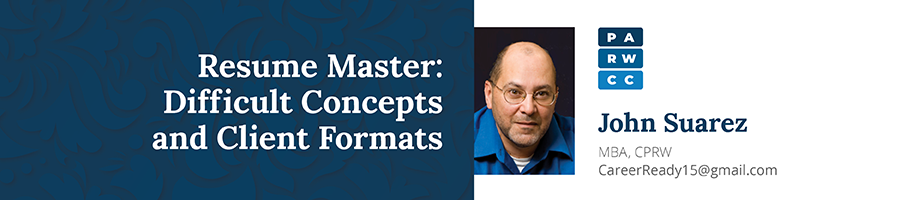
The referral résumé sparks conversation with HPHP clients. In turn, they introduce your work to others who need it. It is meant to be discussed either on the phone or face-to-face with the person who represents an ideal ambassador for your brand. The conversation — as unconventional or uncomfortable as it might seem — is what mobilizes them.
You can see the sections and topics I chose; feel free to reveal any information you want. The 2018 version was two pages; my updated version is more streamlined. Some of you have pretty impressive accomplishments that boost your credibility in the industry; some of you have come from a diverse background that makes for an interesting story. The key is to focus on conversational topics…briefly.
How does that initial conversation with your HPHP client go? Something like this might work:
“I’ve enjoyed working with you and was wondering if you had time to talk to me about what parts of our process you found to be the most valuable. I have attached a copy of my referral résumé; it’s not meant to be shared, but I was hoping we could use it to brainstorm about who you know that might value the kind of work that I do. Would you be open to this?”
This is a cost-effective marketing investment. Every dramatic technical disruption reinforces the need for old-fashioned communication strategies that never go out of style. Just the name “artificial intelligence” tells you everything you need to know about its limitations. I’m a big AI fan, but it’s no substitute for real human connection. My HPHP conversations are 100% of my marketing budget.
What I said in 2018 still holds: strategic referrals are the cheapest, fastest, most reliable, and least luck-driven way to attract clients you love working with. Plus, it is grounded in simple behaviors: write a résumé about your business, choose who you want to read it, and have a conversation about it. Selling clients on the value of networking becomes more powerful when you become a model for its success.
Right now, do you pivot or stay the course? Hunker down or rise up? The landscape seems to change not by the hour, but by the minute. As the current presidential administration continues to sow chaos throughout the global economy, it’s nearly impossible for business leaders to stabilize their footing for long enough to make a plan.
The best way I can conceptualize the situation is to compare it to an ice floe. The temperature is just about freezing, but the ice is thin. You may be fine if you stay where you are, but the ice feels shaky and unsteady beneath your feet. In the distance, you can see pieces breaking off and floating away. Do you wait for cracks to start appearing under you, or do you make a break for it?
At this moment in time, there is no good path forward. Everywhere you look, penguins are jumping into the water because something bad is coming. And then you see seals hunkering down by their holes, refusing to budge.
I can’t offer any certainty in a world that is so profoundly uncertain right now. But I can tell you what I think are some smart steps to take. My first observation is that the market hates uncertainty. Whether you’re receiving products from China and are directly impacted, or you paint houses for a living and the impact is indirect, the uncertainty in the market is going to affect you.
Talking to non-essential retailers, it seems like almost everybody is reporting that their stores have become ghost towns. A big driver in this change is people deciding to make major purchases to lock in prices before the tariffs affect supply lines — cars, dishwashers, etc. Consumers might not need these big purchases right now, but they’re taking money they would otherwise spend on non-essentials in a normal environment.
Adding to this uncertainty is the fact that swaths of the US economy are laying people off to cut costs in an unpredictable time. This leaves people unsure if they’ll have a job in a month, particularly in the public sector, where entire departments can be eliminated seemingly at random. All of this serves to create those cracks in the ice.
First and foremost, my advice is to get your cost structure as low as possible. I realize I’m talking out of both sides of my mouth: layoffs may cause further ripples, but unless you’re cash-rich and ready to weather the storm, get your costs in line. Jettison anything you’re questioning and be as tight as you can, because now is not the time to find yourself without a cash cushion.
At the same time, you have a responsibility to shepherd the emotional health of your team. Your team is just as unsettled as you are. Arguably even more so, actually, if they don’t have decision-making abilities and can only worry about the future of their careers.
If your team has concerns because they see business going away or cuts tightening up or factory floors not running, you need to be up front with your staff. Tell them what you’re thinking and seeing, and give them whatever assurance you can. And if you can’t give them assurances, give them the truth. An uncomfortable truth will do a lot more to create stability and understanding than a comforting lie.
Nobody wants to tell someone that, yes, they could be laid off. But when you deliver that information, tell them what that looks like. In what situation would you need to reduce your workforce? How will you know when you’re at that point? Not only does this give your team some semblance of certainty, but it creates an environment where your team knows what a bad situation for them looks like and has the opportunity to at least try to prevent that from happening.
My final observation is that, while uncertainty incentivizes hunkering down and cutting costs, it also creates opportunity. Sam Walton always says that a recession is a great time to double down on market share. So if you’ve been looking at a new market, new customers, or new areas, now is a good time to reach out. Potential customers might be more open to receiving a message of lowering costs or delivering products faster, especially if your service team is based in the US.
Whatever your value equation is, look at how you can pitch in a chaotic environment to take some more market share. For better or worse, opportunities like this don’t come around all the time.
Above all else, do your best to stay in a good spot. That might be hiking, yoga, or just about anything else, but give yourself time to keep yourself balanced and centered. Nobody else is going to get you off the ice floe, and you have the best odds of success if you’re taking care of yourself.
I don’t see anything that will keep the ice from cracking. It’s just a matter of where and when, and how nimble you are at jumping away from the polar bears.
How natural it is for us to encourage our clients to “network.” But, are we educating them on how to network well?
Before you answer “yes, of course!” let’s look at two definitions for that term. You’re about to read the one so many of our clients (and some of our colleagues) rely on. Sadly, it rarely works. It just increases our clients’ stress. Here is the meaning many people attach to networking:
Networking: A mutually mortifying ritual whereby people impose on every friend, relative, and total stranger, to ask for something none of them can give: a job.
No wonder those clients cringe inwardly at the thought. No wonder some of us are so frustrated when they don’t “do what we encourage them to do.”
Now consider this definition:
Networking: A natural preference for extending value to those who can reciprocate, without any immediate expectation of results, and without giving away the store.
The difference represents a boundary our clients should never cross. That boundary is imposition. Tasking a stranger won’t get results.
When our clients tell everybody in sight they are looking for a job, when they inquire of employees about whether their companies have openings, when they ask friends to “help them find a job,” they have crossed that boundary. When they do, the process shuts down.
Suppose you and I were longtime friends. And further suppose you are employed, while I am looking for a job. I ask you if there are openings in your company. You care about me and want to help.
But I may well have put you in an uncomfortable position. That we are friends doesn’t mean you know how good I am in my career field. If you champion me, and I don’t work out, your brand has been damaged. We may be friends, but what you call a great job, might be a turnoff for me. There are too many chances for too many things to go wrong.
Now let’s consider the power, pleasure, and rewards that come with using the second definition. If I am going to offer true value best, it follows I must have a commanding brand. Building such brands is not only fun, it’s a wonderful source of revenue for your practice. (See “Your Unspoken Brand Speaks Volumes,” The Spotlight, September 2024, pp 12 – 13).
Once I have a powerful brand, it needs to be digitally visible. Making brands digitally visible through LinkedIn and elsewhere is also a source of revenue for your practice. (See “LinkedIn’s Flawed Brand Can Boost Your Clients’ Profiles,” The Spotlight, February 2025, pp 11 – 13.) Brands, even digitally visible ones, don’t run on autopilot. Guide your clients to find who they can exchange value with. Don’t ask clients to come up with specific names. Rather, ask what kind of professionals would fit into that category.
Let me use myself and my clients as examples. I don’t need colleagues in my LI network. We all know each other already. I need people who can help me and my clients beyond the knowledge we all share about our industry.
Since I work with rising, senior, and very senior executives, my network includes enrolled agents (accountants specializing in Federal taxes), employment attorneys, staff for members of Congress, professionals who run think tanks devoted to international trade, organizational development professionals…you get the picture. Each of these experts can help my clients (through me) expand their value.
My clients grow their network by offering value to people in other fields. So my client, an executive director for a professional organization, can give a Congressional staffer insights into new trends in her industry. My international business development client helps a commodities trader understand how Chinese businesses work.
When my clients know what kinds of people in which career fields should be in their network, they search LI and professional organizations to find the best. Then they use LI profiles to find some commonality.
My clients’ first contact with a potential new member of their network never relies on LI’s insipid, canned inmail that says: “Hi! I would like to have you join my network.”
That’s not networking; that’s spamming. It will shut down most networking opportunities.
Here’s a sample Inmail from my client, a program manager in the aviation industry, to someone who might help her. She’s reaching out to a director of an air traffic control center:
“Jim:
As soon as I saw your LinkedIn profile, I made writing to you my first priority.
Let me say right up front: I am not selling anything.
Because we are in related industries I wonder if we might learn from one another.
I guide programs that produce the latest in avionics. In a way, because you’re in air traffic control with the FAA, you are my ultimate customer.
To serve you well in that capacity, I would value your reactions to a new transponder system we’re thinking about.
If that interests you, please suggest some days and times for us to talk. I’ll work hard to align my schedule with yours.
Janet”
Janet got an answer the next day. And her discussions with Jim continue to add value. As she looks for new program management opportunities, you can be sure her cover letter mentions her in-depth knowledge of the customer base. Jim, on the other hand, is much better prepared to join the discussion on how the air traffic control system must improve.
The best way to master networking is to exercise it yourself. My practice has run on networking for more than 30 years. As I find ways to help others, I learn what works and what doesn’t.
For example, years ago I wrote articles to post on LinkedIn. I uploaded to appropriate groups, the ones where my potential clients live. I never got more than 50 readers. Interest would peak for one or two days, and then the curve flat lined.
Now I only post updates. I get 500+ views in a matter of days. Many clients find me through those posts. It’s wonderful to have pre-qualified people seek me out.
That approach really pays off.
My clients won’t stand for being directed to a faceless website (they call it an “automated brochure”). They want to speak with a human. They are not a “gold,” “silver,” or “bronze” package. They want answers that fit their needs. That’s why they go to my LI profile.
Because I target my posts to markets in which my clients live, those who contact me are prequalified. When they see my brand on my profile they are presold.
Compare that to my trying to “salt” my profile with “key words.” LI has more than one billion members! If they search for “career coach” they will get near endless matches! I am supposed to believe my set of key words is so exceptional searchers will find me first? Even if I place in the top one percent that would bury me among hundreds of competitors.
The point? Key words aren’t brands. Key words don’t build networks.
Continue to help your clients build powerful brands. Guide them to become digitally visible. But also keep them from crossing the networking boundary. That way both you and they will enjoy great success.
Let’s talk about something that too often gets left at the threshold of a coaching session: mental health. As a licensed Mental Health First Aid instructor and long-time career coach, I’ve seen firsthand the emotional layers that clients carry into our spaces—layers that too many coaches overlook, rush past, or simply don’t feel equipped to address. But here’s the truth: career coaching without mental health awareness is like trying to build a house with no foundation.
Career transitions are emotional. Period. Whether a client is dealing with rejection, burnout, imposter syndrome, or the loss of identity that can come with a layoff, those emotions show up long before the résumé gets opened. And when we skip the mental check-in—when we jump straight to goal setting—we risk coaching someone who’s emotionally underwater, expecting them to swim to shore with no life jacket.
Now let’s be clear: career coaches aren’t therapists, nor should we pretend to be. But that doesn’t mean we ignore mental health. In fact, it’s our responsibility to create emotionally supportive spaces and recognize when a client’s well-being is impacting their career progress. It means creating a safe environment for clients to say, “I’m not okay,” and knowing how to respond with empathy, presence, and support. It means recognizing when a client needs us to pause the job hunt and instead normalize what they’re feeling. That moment alone can be a breakthrough.
Mental health isn’t a sidebar—it’s central to whether a client can take risks, recover from setbacks, and move forward with confidence. Ignoring it means coaching from the surface. But when we integrate mental health awareness into our coaching, we empower our clients to address the real roadblocks—not just the résumé gaps, but the self-doubt, the overwhelm, the fear.
In every coaching session, there’s a choice point: are we building strategy on shaky ground, or are we grounding our strategy in self-awareness? Checking in on mental and emotional readiness is not just compassionate—it’s strategic. When clients feel heard emotionally, they’re more likely to engage, take action, and stick with the process. That’s the kind of transformation we’re really here for.
This isn’t just about being a better coach—it’s about being a more complete one. It’s about recognizing that the most effective coaching is human-centered, emotionally intelligent, and flexible enough to pause when a client needs support beyond our scope. And yes, sometimes the best coaching move you can make is a referral—not as a retreat, but as a powerful partnership in your client’s healing and growth.
I challenge you to ask yourself before each session: Is my client mentally ready to receive support—or do they need space to be seen first? That one question can shift everything.
Let’s keep this conversation going. Our clients don’t just need coaches—they need they need real support from people who show up with both heart and skill.
Here’s to mindful moves,
Felicia A. Shanklin, M.Ed., CPRW
Licensed Mental Health First Aid Instructor (Adult)
Balanced Harmony Master Series Director

The word “networking” often has a negative connotation to some – it feels daunting and challenging. Networking conjures images of “working” a room at a networking event, shaking hands with scores of people, laughing and smiling ingeniously, and groveling for a job.
However, relationship building sounds much more palatable. We naturally build relationships with family members, neighbors, friends, colleagues, and clients. We often don’t even think about the relationships we build that come naturally – they just happen. Soon, a new relationship blossoms into a friendship or work partnership. These relationships often lead to new opportunities and “leads” for networking, enabling job seekers to reach and attain their career goals.
For example, I built a good working relationship with my bookkeeper. Because we spoke frequently over several months to set up my business, our working relationship evolved into a friendship, and we often had lunch together, discussed our families, and helped each other build our businesses. Because she worked with many different clients, she was able to refer a lawyer, an accountant, and a computer technician. The lawyer was able to manage my LLC incorporation and personal family trust, and recommended a legal professional for business contracting. There was no stress in building this relationship – it happened naturally.
I recently traveled on a 16-hour flight. Engaging in conversation with my seatmate, I learned that he worked for LinkedIn, traveling the world. He told me about his job and how he obtained the position by networking. He began as a contractor for the company, designing interiors for some of their offices. He was approached by one of the company’s permanent employees who asked him if he would be interested in working for the company as a full-time/permanent employee. He now travels to all of the company’s offices globally. We shared pictures, and he provided advice; he also has a wealth of referrals if I desire to redesign any of my interior spaces.
I often hear from my military clients that they struggle with networking, as they are unfamiliar with people outside the military. As a career coach, I ask them who they have connected with and built relationships with during their career. Sometimes we use their holiday card list, list of people they know whom they send birthday wishes to, and other lists. We used to have Rolodexes – today, these lists are often found on social media.
Some of my shy clients do not like to network at any cost. They would rather post hundreds of résumés to job boards and maintain detailed spreadsheets than speak to a human in person or virtually. This is a cold-calling job search.
Whenever I take a taxi while traveling, I ask the driver where he recommends I visit and eat. I find that the best food is outside the tourist areas. I build a quick connection, gain the information needed, and get the taxi driver’s number, so I can set up times for him to drive me to the places he suggested. I get superior service this way.
As a career coach, I ask my clients, “What is the worst thing that can happen if you attend a networking event?”
Methods to Build Connections and/or Leverage Relationships
Most of our clients have many more connections than they believe they do. We need to coach them to identify these contacts, leverage the relationships established over the years, and encourage them to make new connections and build new relationships to support their job search.
Building relationships and connections is a critical component of career management, as most positions are secured by “who you know” or “knowing someone who knows someone” who will refer a client to a recruiter or hiring manager.

The traditional process of networking for a job is often described as a soul-crushing endeavor – filled with uncertainty, rejection, and anxiety. For many job seekers, networking feels like begging: a disempowering process of pleading, in a humiliating manner, for help, asking for favors, and hoping someone takes pity on them. But what if networking didn’t have to be that way?
What if, instead of fear and pain, job seekers approached networking with a sense of purpose, clarity, and confidence – transforming the entire experience into one of empowerment, achievement, and measurable results?
The secret lies in a simple but transformative mindset shift: networking isn’t about asking for a job – it’s about building a powerful, effective, and ‘free’ salesforce. And the product the salesforce is promoting is the job candidate, and the results they can contribute in return for a paycheck.
Below are nine tips for job seekers, and how they, by your coaching techniques, can reframe networking from a painful obligation into an empowering process – by understanding, owning, and communicating their unique value proposition.
The common narrative around job searching is reactive. People lose a job, graduate, or decide to transition – and then scramble to reach out to contacts, nervously asking, “Do you know of any openings?” It feels awkward, intrusive, and one-sided. Why?
Because it is one-sided – when it’s all about the job candidate’s needs and not what they offer. This puts them in a disempowered position. They’re asking for something, offering nothing in return, and hoping for help based on goodwill or charity.
That’s not networking – that’s pleading. But networking doesn’t have to be charity-based. It can be value-driven.
Sales professionals know something that most job seekers don’t: you don’t need to close every deal yourself. You cultivate a salesforce of people who know and believe in the product and its contributional value, who will advocate for them. Job seekers can do the same thing when conducting a rapid employment campaign.
The idea is to turn one’s network – not just friends and former colleagues, but also classmates, mentors, online connections, and even acquaintances – into one’s sales team.
They’re not selling a product – they’re selling the job candidate and their value to potential employers. Their skills. Their experience. Their potential. Their ability to generate exceptional results. But for them to do that effectively, career coaches need to equip them with the right message(s).
A value proposition is a concise, compelling summary (a sentence or two – not a story) of the value a job candidate can deliver. In the hiring process, it answers one essential question:
“What specific results can I generate for a company that the company would eagerly compensate me for?”
To build an effective value proposition, coaches must inspire job candidates to reflect on the following:
Example:
“I help fast-growing SaaS startups reduce churn and increase customer lifetime value by building scalable, data-driven customer success strategies. In my last role, I improved retention by 22% in under a year.” (2 sentences).
This is not begging. This is powerful. It tells the ‘contacts’ exactly what the job seeker does, who they do it for, and how it makes a tangible impact.
Now imagine dozens of people in one’s network of contacts being able to describe a job candidate like that. That’s a job candidate’s salesforce in action.
Once a job seeker’s value proposition is defined, the next step is to communicate it clearly and consistently across all their interactions:
“I’m looking to help companies increase operational efficiency through data automation and workflow optimization. That’s where I’ve consistently delivered results.”
“I specialize in project turnarounds for underperforming marketing teams. If you know of companies facing growth challenges or new product launches, I’d love to contribute.”
When a job candidate’s network of contacts understands what they offer and can articulate it clearly, they can refer them to the right people, open doors of opportunity, and become ambassadors for their rapid employment campaign – and career.
One of the most important mindset shifts is this: The job candidate is not taking—they’re offering.
A job candidate is offering their time, skills, and track record of results. They’re offering the opportunity to contribute to an organization, aligned with the organization’s mandates for growth and/or short term goals.
Every conversation a job candidate has, is a chance to give clarity, not just ask for assistance. Most people actually want to help others succeed, especially when they know what success (or the goal) looks like. This transforms the tone of one’s networking conversations. Instead of saying:
“I’m looking for anything in marketing…”
The job candidate says:
“I’m looking to help companies develop content strategies that drive inbound leads. I’ve had success doing that for fintech and B2B SaaS companies, especially during product launches.”
The job seeker is now not a problem – they’re a solution; an asset.
If job seekers want their network of contacts to work for them, they must make it easy.
“Uncle Will, if you’re introducing me to someone, you could say: ‘I know someone who specializes in leading cross-functional teams through digital transformation projects. She’s delivered six-figure savings for Fortune 500 clients.’”
The more memorable a job candidate’s message is, the more likely their network of contacts will keep them top-of-mind when opportunities arise.
One key to turning networking into a sales engine is self-confidence; not desperation. Just like in sales, most people won’t buy (or refer) on the first contact. Job seekers must stay top-of-mind by:
Job seekers are not pestering – they’re nurturing. They’re an asset.
When networking feels like groveling, it becomes emotionally draining. But when it’s reframed as a strategic process of deploying one’s sales team and showcasing their strengths, it becomes energizing. Job candidates:
This transformation is powerful. Job seekers are no longer at the mercy of job boards and gatekeepers. They’re leading a campaign – strategically, confidently, and collaboratively.
Like any sales team, one’s network needs guidance and feedback. Job seekers must track what’s working:
If not, revisit the value proposition. Is it too vague? Too generic? Too focused on duties instead of results? The goal is to refine one’s message until their network of contacts become a magnet for the kinds of opportunities they want.